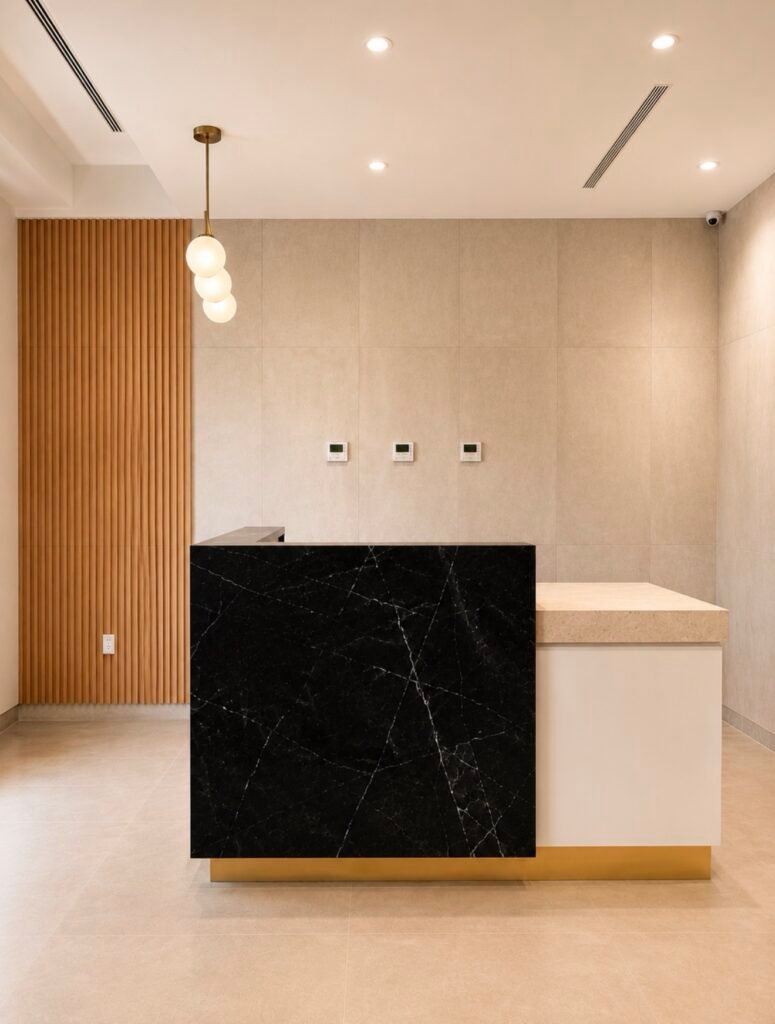

For most businesses, closing the office for a renovation is not an option. Clients still need to be served, employees still need a place to work and revenue can't stop for two months. The good news is that it doesn't have to.
Phased construction allows you to renovate your office while it stays open. Here is how it works, what to plan for and how to keep disruption to a minimum.
What Is Phased Construction?
Phased construction breaks a renovation into separate stages. Instead of renovating the entire office at once, the contractor works on one section while the rest of the office stays in use. When that section is finished, employees move into the new space and construction moves to the next area.
A typical three-phase office renovation might look like this:
Phase 1: Renovate a block of private offices while staff temporarily work in the open area and conference rooms.
Phase 2: Move staff into the completed offices, then renovate the open workspace.
Phase 3: Renovate the reception area, conference rooms and break room, often after hours to keep the client-facing space available during the day.
After-Hours and Weekend Work
Phasing works best when it is combined with smart scheduling. The noisiest and messiest tasks, like demolition, cutting and drilling into concrete, can often be scheduled in the evenings, overnight or on weekends. Quieter work like painting, millwork installation and finish carpentry can happen during business hours when appropriate.
Many commercial buildings in New York already require noisy work to happen outside normal business hours, so planning for after-hours work from the start keeps you in line with building rules.
After-hours labor can cost more, but it is often far less expensive than lost productivity or a temporary relocation.
Planning a Phased Renovation
Map How Your Office Works
Before construction starts, identify what must stay operational at all times: reception, server rooms, files, specific departments or client meeting spaces. Your phasing plan is built around protecting these areas.
Plan Temporary Workspaces
Decide where people will work during each phase. Conference rooms, unused offices and shared spaces can serve as temporary workstations. Some businesses allow part of the team to work remotely during certain phases.
Coordinate IT and Phones
Every time staff move, their network, phones and equipment have to move with them. Your contractor should coordinate with your IT provider so each phase is ready for move-in with working connections.
Protect Occupied Areas
Dust barriers, negative air where needed, floor protection and separate paths for workers keep occupied areas clean and safe. Daily cleanup is essential when employees and clients are next door to construction.
Work With Your Landlord
Your landlord or property manager will likely have rules about work hours, freight elevator use, deliveries and noise. Approvals and insurance certificates need to be in place before work begins. Building these requirements into the phasing plan avoids delays.
Plan Permits by Phase
When your renovation requires permits, inspections may happen at different points in each phase. A contractor experienced with local codes can plan inspections so each phase can be occupied as soon as it is complete.
Does Phasing Take Longer?
Usually, a phased project takes somewhat longer than renovating an empty office, because crews move between areas and some work happens in limited hours. The trade-off is that your business keeps operating the entire time. For most companies, that is worth far more than a faster schedule.
Signs You Need a Phased Approach
- You can't afford to close or relocate, even for a few weeks
- Clients visit your office regularly
- Your team relies on on-site equipment, files or servers
- Your lease or building rules limit when noisy work can happen
How Dacaj Renovates Occupied Offices
Dacaj Construction renovates offices across New York City, Westchester County and Nassau County for law firms, medical offices, creative studios and corporate clients. We plan phased schedules around how your business works, schedule disruptive work after hours and on weekends, and coordinate with your IT, equipment vendors and building management so each phase is ready for your team.
Learn more about our office renovation services or call (917) 564-1006 to schedule a site visit.