

If you own a co-op in Manhattan, Westchester, or Nassau County, the co-op alteration agreement NYC boards require is what you need to understand before you renovate. the single document that will make or break your project isn’t your contract with the contractor — it’s your building’s alteration agreement. After decades running renovations in NYC co-op buildings, I can tell you that the projects that go smoothly are the ones where the owner and design team understand this document before demolition ever starts. The ones that stall, rack up fees, or get shut down mid-job are almost always the ones where somebody assumed a co-op renovation works like a house.
It doesn’t. Here’s what an alteration agreement actually is, what changed in 2026, and how to get through board approval without losing months.
What an Alteration Agreement Really Is
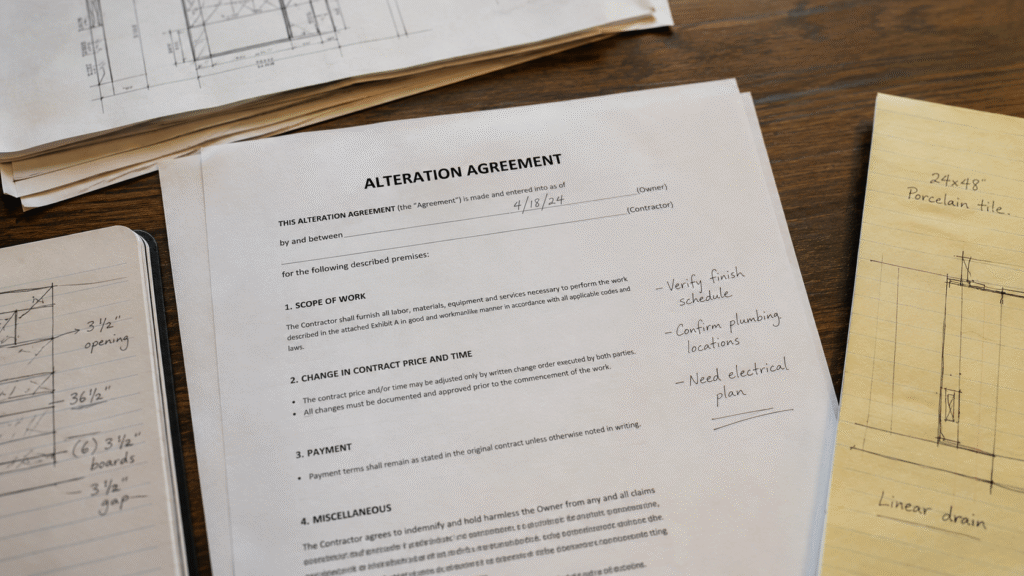
An alteration agreement is a legally binding contract between you (the shareholder) and your co-op board that spells out the terms, requirements, and responsibilities for any work inside your unit. It is not primarily there to protect you. It exists to protect the building’s infrastructure and your neighbors’ quiet enjoyment of their homes.
That distinction matters. The agreement will dictate what you can touch, when your crew can work, how much you have to deposit, what insurance your contractor must carry, and who is liable if something goes wrong. Every building’s version is a little different, which is why your architect and contractor need to read your specific agreement — not a generic template — before pricing or scheduling anything.
The Big 2026 Change: Board Attestation in DOB NOW
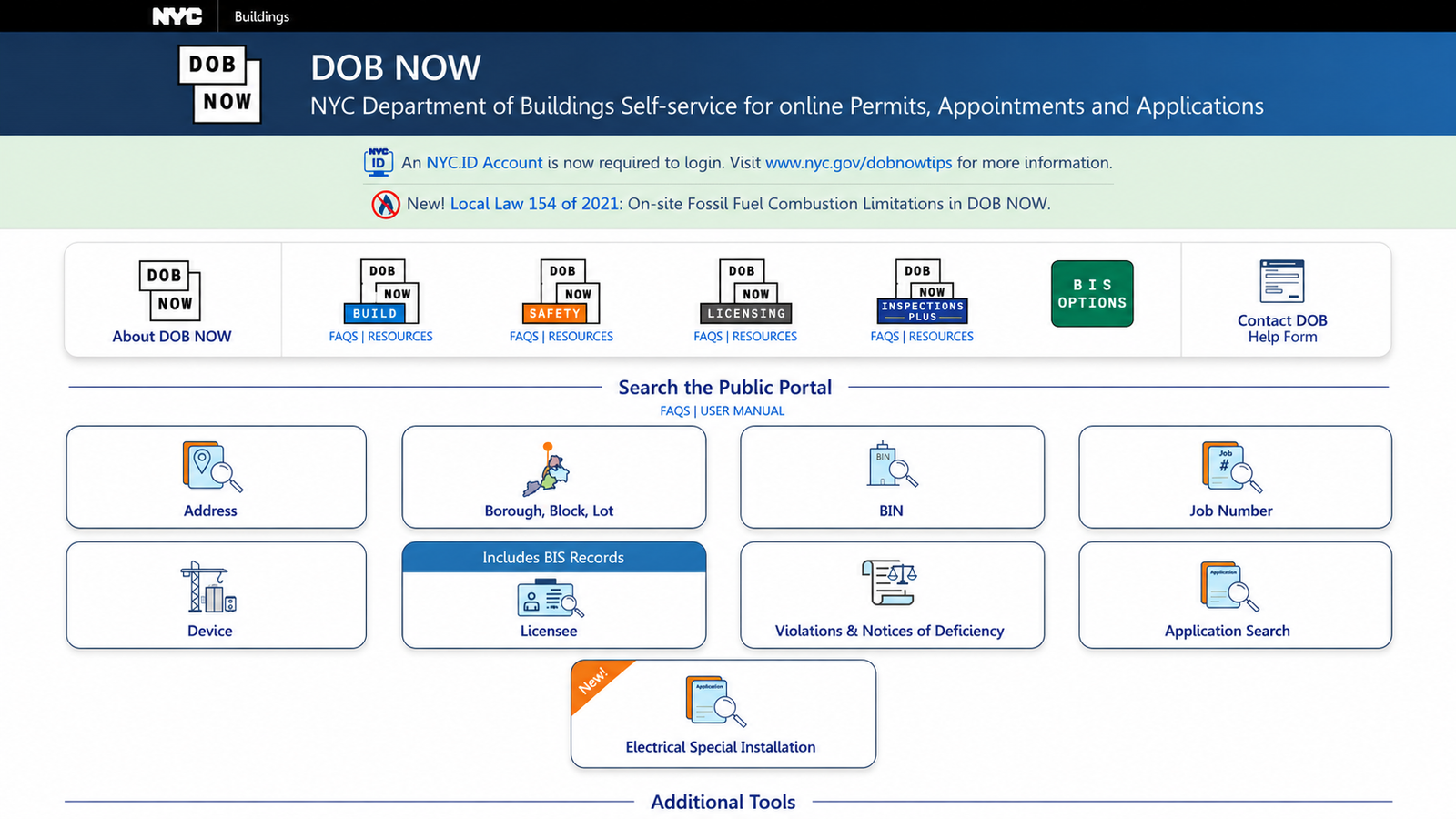
Every co-op alteration agreement NYC boards issue now reflects this update: as of January 26, 2026, the NYC Department of Buildings requires co-op and condo boards to attest inside the DOB NOW system that they have reviewed and approved a shareholder’s renovation plans before the DOB will accept the permit filing.
In plain terms, when your filing lists you as a co-op tenant-shareholder, your board is automatically added as a stakeholder on the job. A board representative has to formally confirm that they authorized you to file. This applies to all alteration filings — ALT-1, ALT-2, and ALT-3.
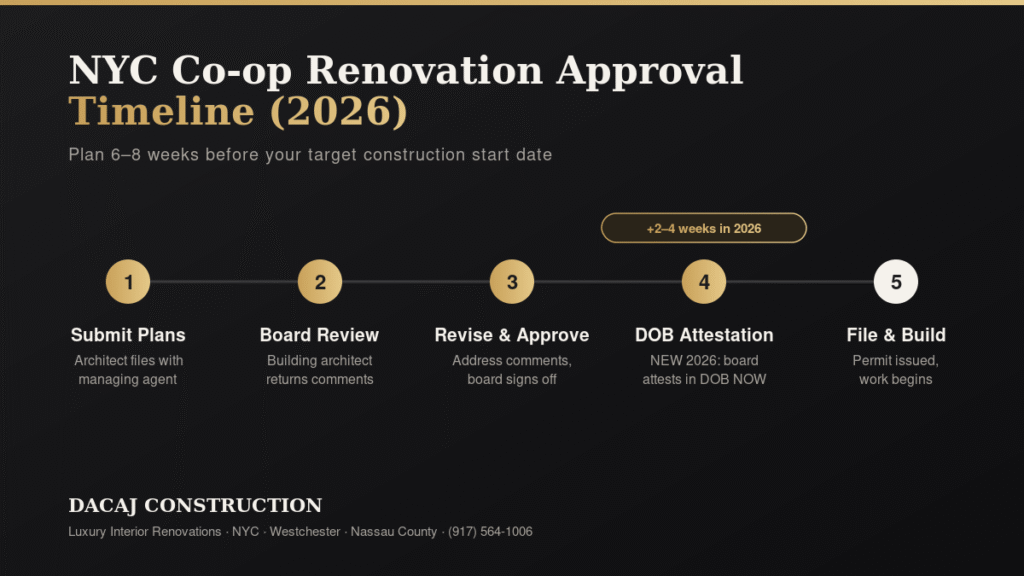
What does that mean for your schedule? Expect it to add roughly two to four weeks to the permit timeline. It’s one more sign-off that has to happen before the DOB moves. If your board is slow to respond or your managing agent is juggling a lot of filings, that window can stretch. Build it into your plan from day one.
The Board Approval Process, Step by Step
Board approval typically takes anywhere from two weeks to three months. Here’s the usual sequence:
First, your architect submits the drawings and the signed alteration agreement to the building’s managing agent. Second, the managing agent forwards everything to the building’s reviewing architect or engineer, who almost always comes back with “comments” — questions or requested changes. Third, your team revises the plans to answer those comments. Finally, once the building’s reviewer is satisfied, the board authorizes you to file with the DOB.
The comment-and-revision loop is where most time gets lost. A design team that knows how to read a building’s specific rules and pre-empts the obvious objections can cut a full round of back-and-forth out of the process.
The Rules That Get Plans Rejected
A few recurring issues sink otherwise good plans:
The wet-over-dry rule is the most common. Most boards prohibit shareholders from placing a kitchen or bathroom over a bedroom or living room in the apartment below. If your dream layout moves plumbing into a “dry” area, expect pushback — or a hard no.
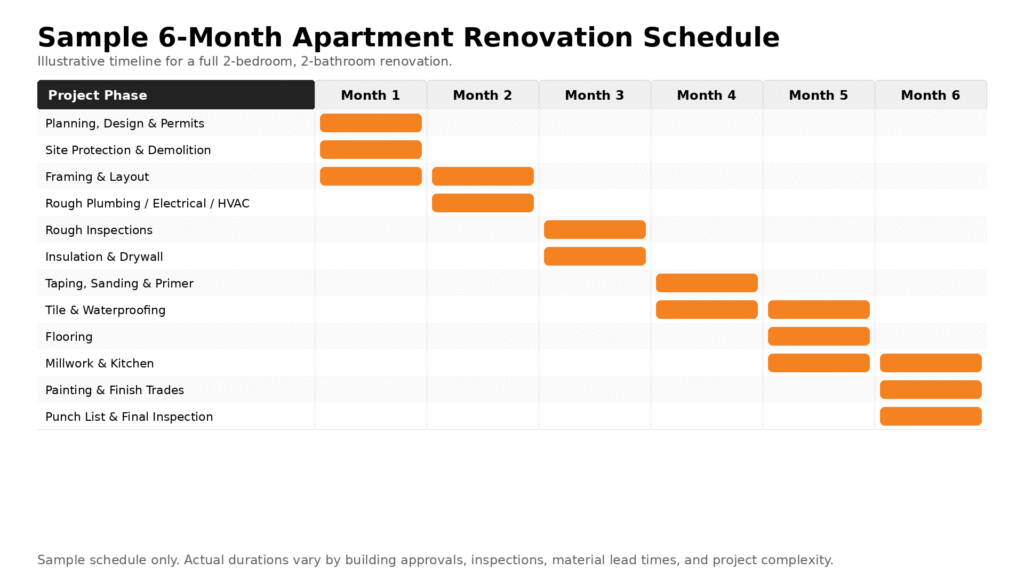
Work-hour restrictions catch owners off guard, too. Most co-op agreements limit construction to weekdays, and many restrict hours to 9:00 AM to 5:00 PM, sometimes as narrow as 10:00 AM to 4:00 PM. A gut renovation you assumed would take three months can stretch considerably when you only get six working hours a day, five days a week.
Fees and Deposits: Budget for These Early
Co-op renovations carry costs that have nothing to do with your contractor’s price:
An alteration agreement fee — a non-refundable administrative charge for processing and monitoring your project — typically runs $1,000 to $5,000 depending on the building’s size and your project’s scope. On top of that, boards usually hold a refundable security deposit to cover potential damage to common areas or unfinished work. For a major renovation, that deposit commonly falls between $5,000 and $20,000.
None of this is negotiable in most buildings, and it’s money you need available before work starts. Factor it into the budget conversation from the beginning so it isn’t a surprise.

Insurance: The Silent Deal-Breaker
This is where I see good contractors get rejected. In 2026, most NYC co-ops require the contractor to carry $1 million to $2 million in general liability (commonly $1M per occurrence / $2M aggregate), and most Manhattan and Brooklyn buildings now also require umbrella coverage. High-end and high-rise boards frequently demand $2M to $5M — and sometimes $5M to $10M — in umbrella limits.
But the limits are only half the battle. Boards reject certificates of insurance over the fine print: the co-op corporation, the managing agent, and sometimes the building’s lender must be named as additional insured. Certificates often need primary and non-contributory language, a waiver of subrogation in favor of the building, and specific cancellation-notice terms. Workers’ compensation is required for any contractor with employees. A single missing endorsement or the wrong certificate holder can send you back to square one.
Hire a contractor who has been through NYC co-op boards before and whose insurance broker knows how to issue a compliant certificate the first time. It saves weeks.
A Note for Designers and Architects
If you’re specifying a project in a co-op, the co-op alteration agreement NYC boards require should shape your drawings, not the other way around. Reading the building’s rules up front — wet-over-dry limits, allowable wall and floor assemblies, sound-attenuation requirements, and any restrictions on structural or mechanical changes — lets you design something that will actually clear review. Partnering early with a contractor who lives in these buildings means fewer surprises at the comment stage and a cleaner path to the board’s attestation.

The Bottom Line
A co-op renovation isn’t harder than any other renovation — it’s just more procedural. The alteration agreement, the 2026 DOB attestation step, the insurance requirements, and the fees are all knowable in advance. Handle them early and the actual construction is the easy part. Treat them as afterthoughts and you’ll spend your first two months fighting paperwork instead of building.
If you’re planning a co-op project, our step-by-step home renovation planning guide for NYC and Westchester homeowners is a good companion to this one.
Frequently Asked Questions
How long does co-op board approval take in NYC?
Typically two weeks to three months, depending on the building. In 2026, plan for an additional two to four weeks because of the new DOB NOW board attestation requirement. As a rule of thumb, submit your plans to the board at least 8 to 12 weeks before your target start date.
What is the wet-over-dry rule?
It’s a common co-op restriction that prohibits placing a kitchen or bathroom over a bedroom or living room in the unit below, to protect neighbors from leaks and noise. It’s one of the most frequent reasons plans get rejected, so confirm your layout complies before finalizing drawings.
How much are co-op alteration fees and deposits?
Non-refundable alteration agreement fees typically run $1,000 to $5,000, and refundable security deposits for major renovations commonly range from $5,000 to $20,000. Amounts vary by building size and project scope.
What insurance does my contractor need for a co-op renovation?
Usually $1M to $2M in general liability plus umbrella coverage (often $2M to $10M in higher-end buildings), workers’ compensation, and a certificate naming the co-op and managing agent as additional insured — with primary and non-contributory language and a waiver of subrogation. Missing endorsements are a common cause of rejection.
Ready to Renovate Your Co-op?
As specialists in the co-op alteration agreement NYC process, Dacaj Construction has guided countless NYC, Westchester, and Nassau County co-op owners, designers, and architects through alteration agreements, board approvals, and DOB filings — and delivered the luxury finishes that make the wait worth it. Book a free consultation and let’s map out your project the right way. Call (917) 564-1006 or schedule a meeting online.
Have a commercial space instead? We also handle office and commercial renovations in NYC.